PM Modi Bharat Renewable Energy Summit 2026: India Hits 50 Percent Non-Fossil Power Five Years Early
Prime Minister Narendra Modi inaugurated the Bharat Renewable Energy Summit and Expo 2026 at Bharat Mandapam in New Delhi on 2 November 2026, using the opening of the four-day event to set out India’s next big clean-energy ambition. Held from 2 to 5 November under the theme Invest, Innovate, Inspire, the summit has brought together policymakers, investors and industry leaders from more than 130 countries, along with over 400 exhibitors, making it one of the largest clean-energy gatherings hosted in India. The event is being held alongside the ninth Assembly of the International Solar Alliance and the fourth International Conference on Green Hydrogen, underlining how central clean energy has become to India’s economic and diplomatic agenda.
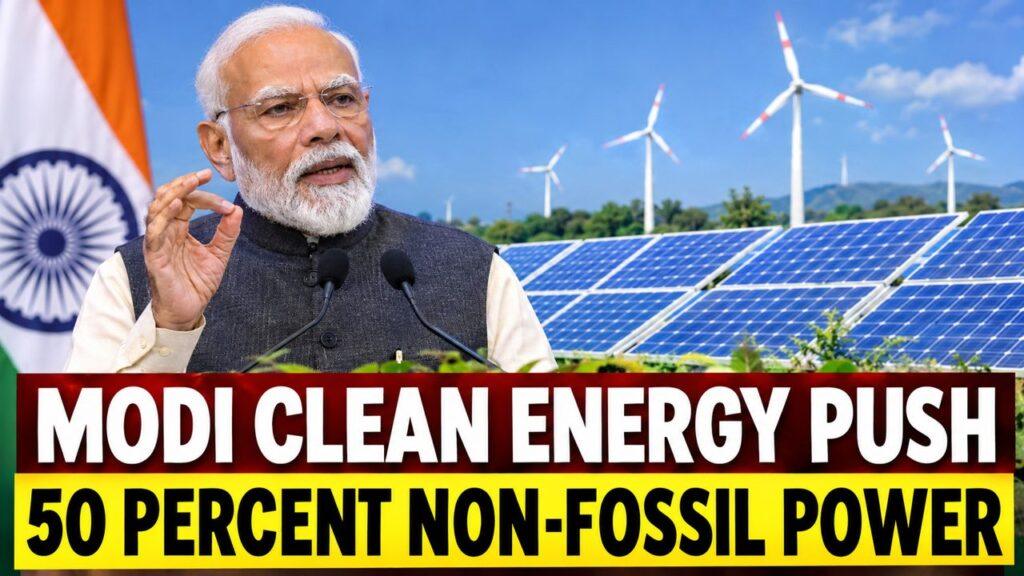
The centrepiece of the Prime Minister’s address was a milestone India has already crossed. Modi said India achieved its Paris Agreement commitment of sourcing 50 percent of its installed electricity capacity from non-fossil fuel sources in 2025, five years ahead of the 2030 deadline. Non-fossil sources now account for more than half of India’s installed power capacity, which has reached nearly 300 gigawatts. Ministry figures reported alongside the summit put installed renewable capacity, including large hydropower, at about 299.25 GW as of 30 September 2026, with total non-fossil capacity including nuclear power at 308.03 GW, led by solar at 171.05 GW and wind at 59.20 GW.
From that base, the Prime Minister set two targets. The first is the existing goal of 500 GW of non-fossil fuel capacity by 2030, which India is now firmly pursuing. The second is a new ambition announced at the summit: adding another 500 GW of non-fossil capacity over the next 10 to 11 years. Modi also projected investment opportunities of more than Rs 20 lakh crore in India’s renewable energy sector by 2030, pointing to the country’s growing clean-energy market, manufacturing capacity and policy stability as reasons for investors to back Indian projects. He urged startups, IITs, innovators and entrepreneurs to develop round-the-clock, all-weather solar models for households, including rooftop solar cooking to cut dependence on imported gas and home solar charging for electric two-wheelers and cars.
The Prime Minister framed clean energy as a question of economic security, not only of environment. He said recent global crises, from the Covid-19 pandemic to the conflict in West Asia, had shown how closely energy security is linked with economic stability, and warned that continued heavy dependence on fossil fuels could keep disrupting the global economy. India’s answer, in his telling, is a 12-year clean-energy journey defined by promises, passion and performance, in which the country now ranks among the top three nations in solar and renewable energy. As the summit runs through 5 November, its message to delegates is that India intends to keep adding capacity at scale, with solar, wind, green hydrogen and storage carrying the next phase of growth.