
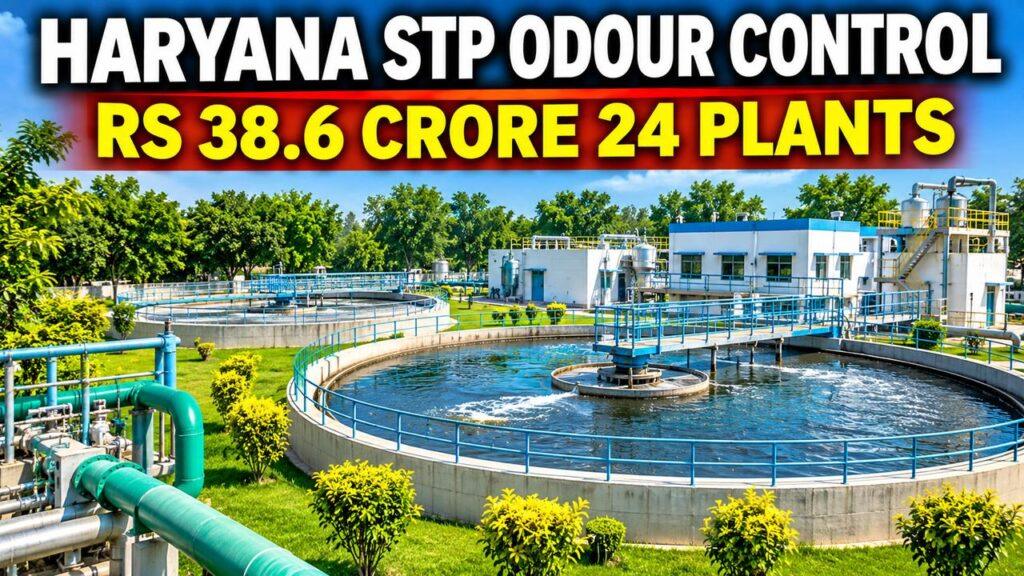
Haryana Rs 38.6 Crore Odour Control Systems at 24 Sewage Treatment Plants
Haryana will install activated carbon-based odour-control systems at 24 sewage treatment plants across the state at an estimated cost of about Rs 38.6 crore, giving long-awaited relief to residents and farmers who live near the plants. Public Health Engineering and Public Works Minister Ranbir Gangwa has directed officials to expedite the proposed installations, saying the foul smell around treatment plants and the quality of treated water must both be taken seriously.
The problem is a familiar one for people living near sewage treatment plants. Residents and farmers have frequently complained of foul odour around the plants and of poor quality of treated wastewater. The new systems are designed to reduce the smell of treated wastewater at the source, using activated carbon technology, and to improve the quality of the treated water so that it can be put to productive use, particularly for irrigation.
The Public Health Engineering Department has identified 25 sewage treatment plants with a combined capacity of 230.5 million litres per day, which are currently treating about 171.13 million litres of sewage every day. Activated carbon systems are proposed at 24 of these plants at an estimated cost of Rs 38.65 crore (Rs 3865.806 lakh). The plants covered include facilities in Ambala, Hisar, Hansi, Narnaund, Jind, Julana, Safidon, Fatehabad, Bhuna, Bhiwani, Siwani and Loharu, among other locations across the state.
At a review meeting at the Civil Secretariat, Minister Gangwa directed officials to give priority to resolving farmers’ complaints and to ensure that treated wastewater is suitable for reuse, particularly for irrigation. The direction reflects a wider shift in how treated water is viewed — not as waste to be disposed of, but as a resource that can support farming if it is treated to the right standard. Better treated water quality also means less pollution of local water bodies and surroundings.
For farmers, the benefit is twofold. First, the odour problem that has affected daily life near treatment plants should reduce once the systems are in place. Second, treated water of better quality can be reused for irrigation, easing pressure on freshwater sources during cropping seasons. The department has been asked to move quickly on the installations, and the minister has stressed effective steps rather than piecemeal fixes.
The project is part of the state government’s wider infrastructure and public health work. Sewage treatment capacity has grown with urbanisation, and keeping that infrastructure clean, odour-free and useful for reuse has become a practical priority for towns and farming areas alike. Once installed, the systems at the 24 plants are expected to improve living conditions around the plants and raise the standard of treated water leaving them.