India Janjatiya Gaurav Pakhwada Begins 1 November: 300 Tribal Projects and Two Digital Platforms
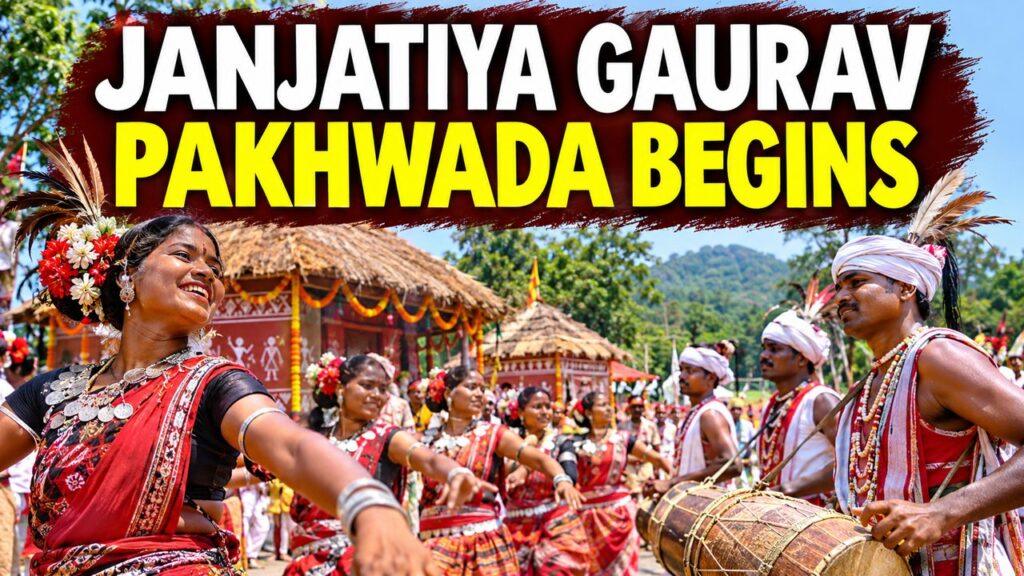
India’s Janjatiya Gaurav Pakhwada began on 1 November 2026, a fortnight-long national observance for tribal communities that runs until 15 November and culminates in Janjatiya Gaurav Diwas, the birth anniversary of freedom fighter Bhagwan Birsa Munda. The Ministry of Tribal Affairs announced the programme on 27 October 2026.
More than 300 projects for tribal communities are lined up during the fortnight, including 228 projects scheduled for inauguration and 74 for foundation-stone laying. Among them are a new Tribal Research Institute building in Itanagar in Arunachal Pradesh and the Ropuiliani Tribal Freedom Fighter Museum at Kelsih in Mizoram.
Two national digital platforms are central to this year’s programme. The Jan-HIT portal, developed with the Indian Council of Medical Research, will provide health data disaggregated by tribe across 20 states, helping planners assess health conditions and target interventions more precisely. The National Forest Rights Act Digital Platform will move the full forest rights claim process onto a single system, from submission of claims by Gram Sabhas to the issue of digitally signed titles.
The fortnight also carries a large service-delivery push. Scholarship access camps in 73 districts will help students with applications and Aadhaar seeding, while states will hold Aadhaar, Ayushman card and sickle cell screening camps, along with legal literacy camps on forest rights. About 1.54 lakh Adi Karmayogi volunteers across 76,963 villages are being trained to support community participation.
More than 160 state and union territory-level activities are planned across 19 states and union territories. Around 200 students from Eklavya Model Residential Schools are scheduled to interact with President Droupadi Murmu at Rashtrapati Bhavan on 12 November, and a National Tribal Literary Festival will be held in New Delhi on 12 and 13 November.
The observance is linked to two major tribal development initiatives: PM-JANMAN, which focuses on Particularly Vulnerable Tribal Groups through saturation of essential services, and the Dharti Aaba Janjatiya Gram Utkarsh Abhiyan, which addresses gaps in basic services and infrastructure in tribal-majority villages. Together, the fortnight combines cultural celebration with infrastructure, healthcare, education and welfare delivery for tribal communities across the country.