Haryana Lado Lakshmi Yojana New Rules from 1 November: Income Limit Rs 1.80 Lakh and Fixed Rs 2100 Benefit
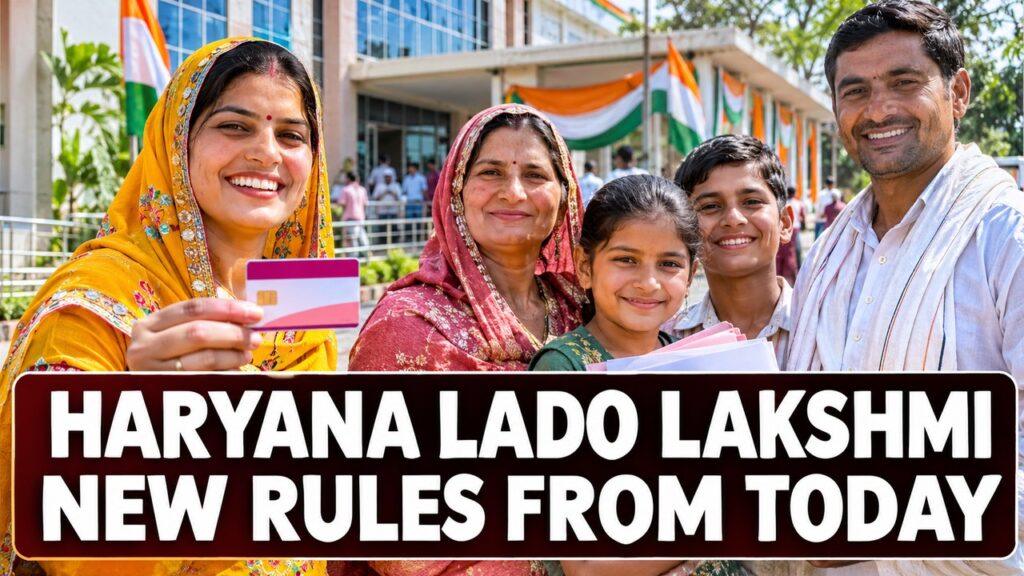
New rules for Haryana’s Deen Dayal Lado Lakshmi Yojana have come into force from 1 November 2026, widening the scheme’s reach and fixing the monthly benefit for eligible women at Rs 2,100. The changes were approved by the Haryana Cabinet on 10 October 2026 at a meeting chaired by Chief Minister Nayab Singh Saini.
The most important change is the family income limit. Earlier, only women from families with a verified annual income up to Rs 1 lakh could qualify. From 1 November, the limit has been raised to Rs 1.80 lakh a year, as recorded in the Family Information Database Repository. Officials expect the higher limit to bring a large additional group of women into the scheme.
The Cabinet also removed the option for a beneficiary to choose a lower monthly amount. Every eligible beneficiary will now receive the prescribed benefit of Rs 2,100 per month, bringing uniformity to payments and simplifying administration.
Another simplification concerns verification. Beneficiaries will now complete face authentication, or liveness verification, through the Lado Lakshmi app once every three months instead of every month, reducing the burden on women while keeping the benefit flowing.
Mothers in three special categories linked to their children’s board results, learning under NIPUN Bharat, and recovery from malnutrition can now apply with a family income up to Rs 3 lakh, a higher limit than the general Rs 1.80 lakh ceiling.
The scheme, launched on 25 September 2025 and run by the Social Justice and Empowerment Department, gives monthly income support to women from poor families. Women aged 23 to 60 years who have lived in Haryana for at least 15 years can apply, and women who married into Haryana from another state qualify if their husband meets the 15-year residence condition. Women already receiving another government pension or monthly allowance are not eligible. Applications are made only through the Lado Lakshmi app, and payments go directly to bank accounts.
More than 10 lakh women already benefit from the scheme, according to officials, and the new rules are designed to extend that support to more households across the state while making the process simpler for beneficiaries.