
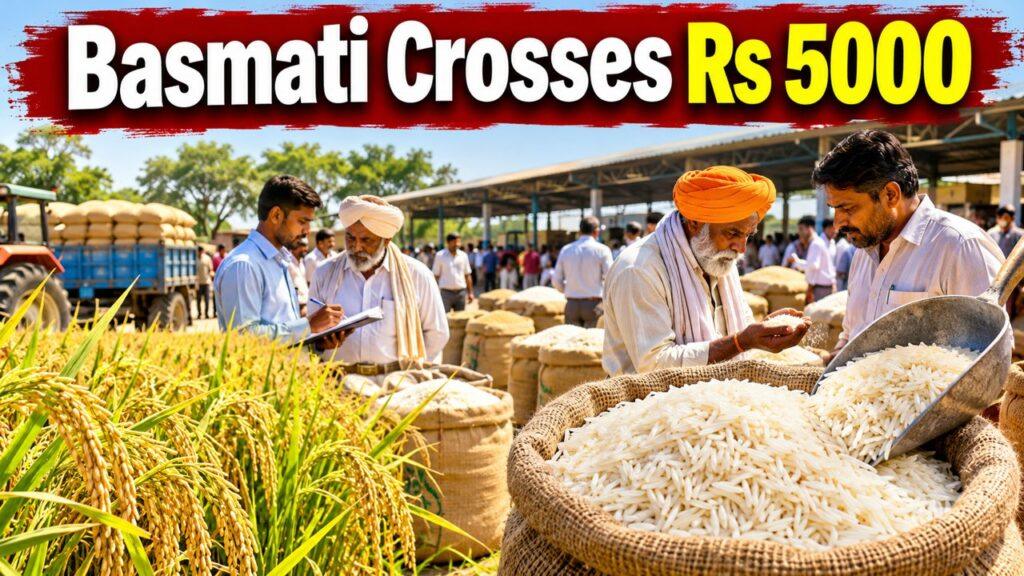
Haryana Basmati Paddy Prices Cross Rs 5000 Per Quintal as Export Demand Lifts Farmer Returns
Basmati paddy prices in Haryana mandis have crossed Rs 5,000 per quintal, giving farmers in the state’s rice belt a strong start to the marketing season. Traders report that premium varieties are fetching around Rs 1,000 to Rs 1,500 per quintal more than they did at the same time last year, a jump that is being driven mainly by firm demand from buyers in West Asia and the Gulf.
According to market reports, the popular Pusa 1121 variety has touched Rs 5,500 per quintal in some markets, while farmers are generally receiving between Rs 4,500 and Rs 5,500 per quintal for basmati paddy this season. Last year, the same produce was selling for roughly Rs 3,500 to Rs 4,500 per quintal. In Karnal, one of Haryana’s best-known basmati trading centres, the 1121 variety has been quoted at around Rs 5,200 per quintal, with the 1509 variety trading near Rs 4,500 per quintal.
Exporters say the rise reflects a combination of strong overseas orders and tighter availability. Concern about food security in international markets has kept buyers active, while a smaller paddy area this year and weather-related damage to part of the crop have limited supplies. Export prices for 1121 rice at Mundra and Kandla ports have also firmed up, rising by about 6 per cent in a week to around 1,156 dollars per tonne.
For Haryana’s farmers, the price rise matters because basmati is a high-value crop and much of it is grown for export. The state’s Karnal belt is central to this trade, and higher mandi rates translate directly into better returns for growers who bring clean, well-dried grain to market. Milled 1121 rice has been quoted at around Rs 9,525 to Rs 9,725 per quintal in Karnal, while prices in Delhi have been higher still.
Some farmers are holding back part of their produce in the hope that prices will rise further by December, as harvesting is still under way and export demand remains active. Prices, however, vary by variety, grain quality and moisture content, and they can differ from mandi to mandi, so growers should check the day’s rate at their local mandi before selling. On current trends, though, this season is shaping up as a rewarding one for Haryana’s basmati growers.