Modi Cabinet Approves Rs 2,814 Crore Critical Mineral Processing Scheme for India
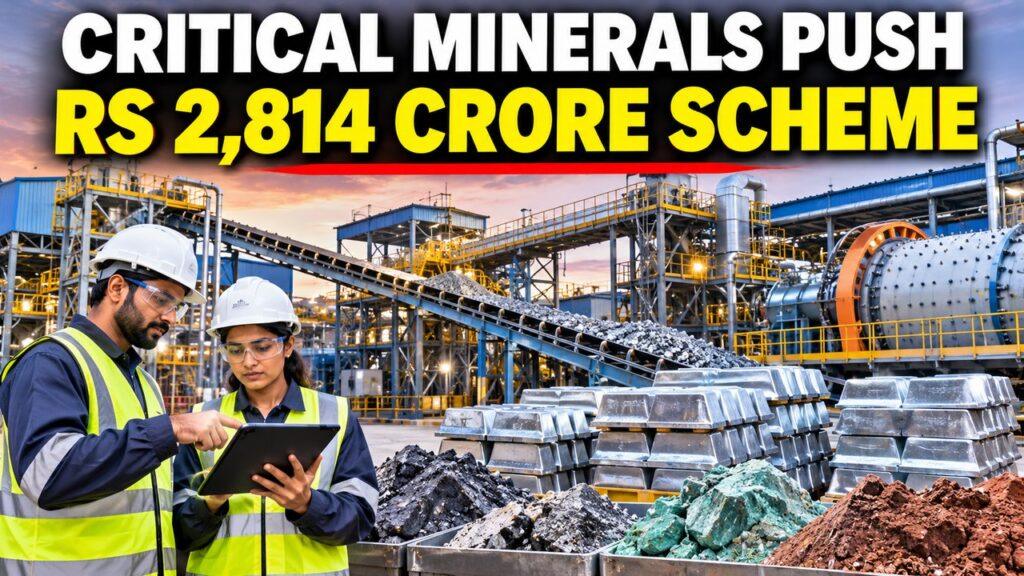
The Union Cabinet chaired by Prime Minister Narendra Modi on Wednesday approved a Rs 2,814 crore capital expenditure support scheme to promote critical mineral processing in India. Information and Broadcasting Minister Ashwini Vaishnaw announced the decision after the Cabinet meeting on 4 November 2026, saying the scheme will be implemented over five years, from financial year 2026-27 to 2030-31. The scheme is aimed at strengthening India’s critical mineral ecosystem, so that minerals mined or imported in raw form can be refined and processed into high-purity compounds within the country.
Critical minerals such as lithium and nickel are the backbone of modern manufacturing. They go into the batteries that power electric vehicles and store renewable energy, into electronics, and into advanced industrial products. At present, much of the world’s processing capacity is concentrated abroad, which leaves importing countries exposed to supply disruptions and price swings. By supporting domestic processing plants, the government wants India to capture more of this value chain at home, reduce import dependence and make its clean-energy and manufacturing plans more secure.
Under the framework reported for the scheme, the government is likely to offer capital subsidy of 30 per cent of eligible investment for setting up four processing plants. Two of these would be lithium processing facilities, each with a minimum capacity of 30 kilotonnes, and two would be nickel processing facilities, each with a minimum capacity of 50 kilotonnes. The maximum capital support is likely to be capped at Rs 500 crore per beneficiary for lithium processing plants and Rs 900 crore per beneficiary for nickel processing plants. Four states have been identified for critical mineral processing parks under the framework: Andhra Pradesh, Odisha, Gujarat and Maharashtra.
The scheme fits into a wider national effort. India has been building a critical minerals strategy through the National Critical Minerals Mission, which covers exploration, mining, processing and recycling, and the new capital support scheme supplies the processing link in that chain. Processing lithium and nickel ores and intermediate products into high-purity compounds is a technically demanding step, and the subsidy is meant to offset the high upfront cost of plants that meet global quality standards. The five-year window to 2030-31 gives developers time to build and commission facilities while demand from battery and electric-vehicle makers continues to grow.
The announcement was made alongside two other major Cabinet decisions on the same day: a Rs 14,500 crore viability gap funding scheme for 92 gigawatt-hours of grid-scale energy storage, and a Rs 4,371 crore scheme to modernise the national statistical system. Taken together, the three decisions show the government’s twin focus on energy transition and on the data and industrial base that supports it. Energy storage needs batteries, batteries need processed lithium and nickel, and processed minerals need domestic plants — the critical minerals scheme supplies the middle of that chain.
Officials have not yet published the full eligibility criteria, the exact nature of financial assistance for each applicant, or the list of companies that will qualify, and those details will matter for investors weighing projects. What is clear from the Cabinet approval is the direction: India will pay part of the capital cost to bring mineral processing home, with support capped per beneficiary and plants planned across four states. Companies and state governments will now watch for the detailed guidelines, which will decide how quickly the first plants move from announcement to construction.