PM Modi to Visit Brussels in December to Sign India-EU Free Trade Deal
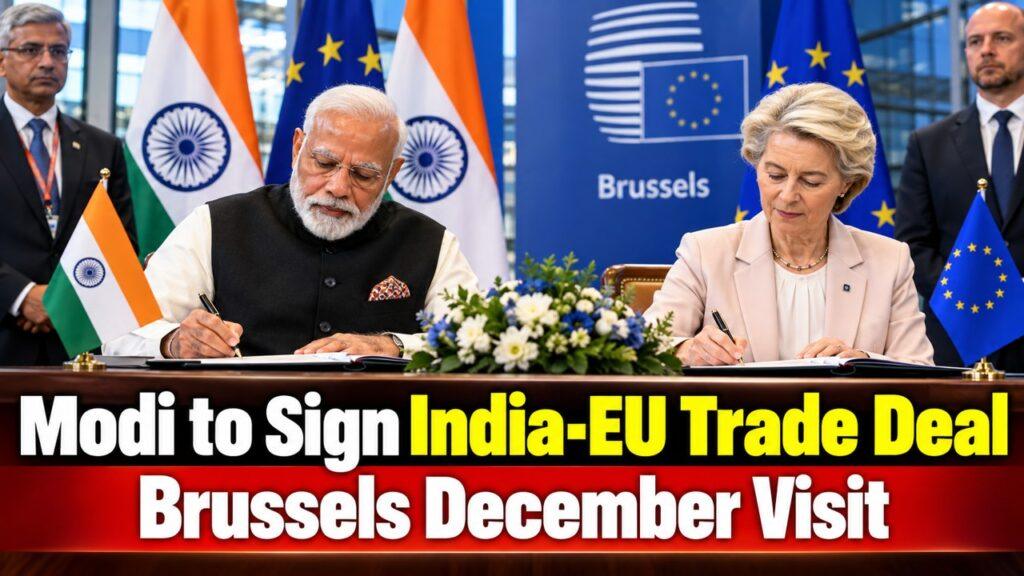
Prime Minister Narendra Modi is expected to visit Brussels in December to formally sign the India-European Union free trade agreement, a landmark pact that both sides hope will reshape trade between two of the world’s largest economies. European Council President Antonio Costa confirmed the visit on Thursday, saying at an event organised by the Montreal Council on Foreign Relations in Canada that Prime Minister Modi will come in December to sign the deal. The visit is expected shortly before a meeting of European leaders in Brussels scheduled to begin on December 17. The European Parliament’s Foreign Affairs Committee Chair, David McAllister, has said the agreement is expected to be signed by mid-December, with a consent vote in the European Parliament expected by spring next year, paving the way for the pact to enter into force by mid-2027. India and the European Union concluded negotiations on the agreement earlier this year, and the European Commission proposed its signature in September. The pact is expected to create a market covering more than two billion people and accounting for around a quarter of the global economy. India is expected to gain preferential or duty-free access to the European market for more than 99 percent of its exports by value, benefiting sectors such as textiles, leather, and gems and jewellery. In return, the European Union would receive tariff cuts or exemptions on a substantial share of the goods it sends to India. The agreement also extends to services, including information technology, professional services, business consulting, and research and development. European Union Ambassador to India Jean-Eric Paquet has described the agreement as a game changer in managing supply chains, noting that 99 percent of the trade India has with Europe will be rate-free once the deal enters into force. The agreement is expected to deepen investment flows and help both sides diversify supply chains at a time of growing concern over economic dependencies and geopolitical risks. The European Commission has proposed expediting approval using the agreement’s original English text, without waiting for translations into all 24 official European Union languages. Although Parliament cannot amend the text of the agreement, its consent is required before it enters into force. Some reports have suggested December 17 or 18 as possible signing dates, but the exact date has not been officially confirmed. For India, the deal marks a major step in opening one of the world’s largest markets to its exporters, while giving European businesses wider access to India’s fast-growing economy.