Haryana Foreign Tours Now Need Chief Secretary Scrutiny Before CM Approval
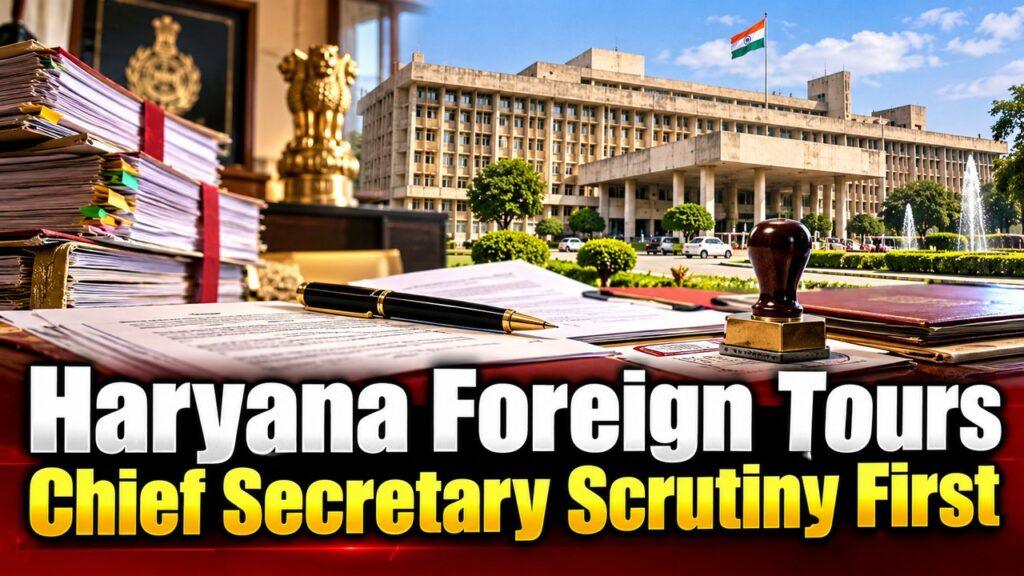
The Haryana government has tightened the way official foreign tours of its officers and employees are approved, adding a compulsory scrutiny stage before any proposal can reach the Chief Minister. Under the new arrangement, notified by the Chief Secretary’s office on 30 October 2026, no foreign-visit proposal will go directly to the Chief Minister for final orders. Every proposal must first pass through a preliminary examination by the Chief Secretary’s office, which will check it in detail and only then forward eligible cases for final approval.
The scope of the new procedure is deliberately wide. It covers officers of the All India Services as well as state government employees in Groups A, B, C and D, and it also applies to personnel of government boards, corporations and statutory bodies. In other words, the same checking process now applies at every level, from senior officers to junior staff, rather than leaving any category outside the system.
The change follows the observation that proposals for official foreign visits were being sent straight to the Chief Minister, without a full examination of whether they were justified. Under the revised process, the Chief Secretary’s office will no longer limit itself to cadre clearance alone. It will examine each proposal on four points: whether the officer or employee is eligible for foreign travel under the applicable service rules, how many foreign visits the person has already made and what that record shows, how necessary the proposed visit is and what benefit it is likely to bring to the department and the state, and whether the concerned department has adequate budget provision for the trip. Only a proposal that clears all four tests will move forward.
The procedure applies to a broad range of overseas engagements, including official delegations, study tours, training programmes, international conferences, seminars and official meetings abroad. The final authority to approve a visit stays with the Chief Minister; the Chief Secretary’s office carries out the preliminary scrutiny. The government expects the added layer of examination to bring greater discipline to public spending on foreign travel and to make the approval process more transparent and accountable.