
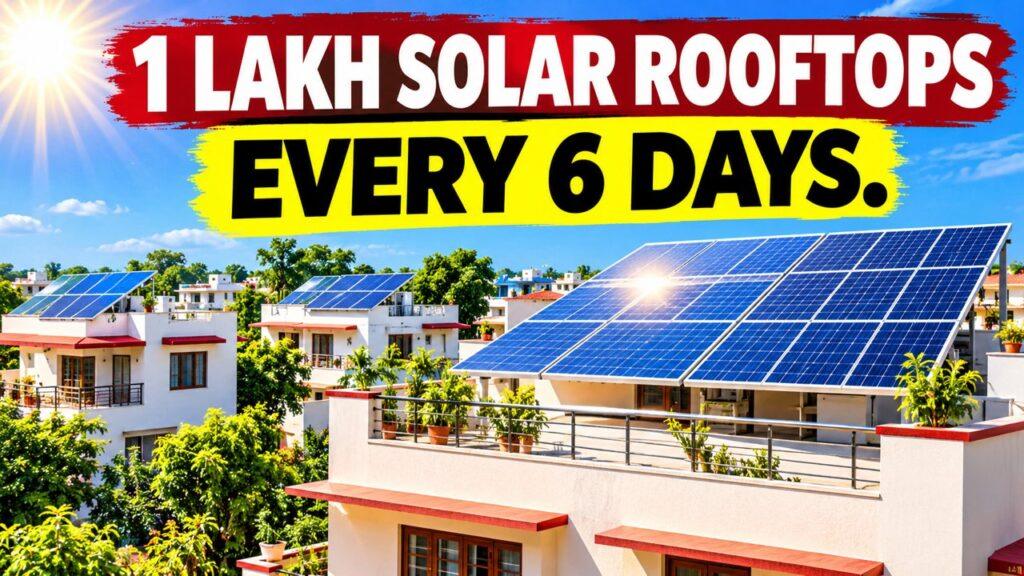
PM Surya Ghar: 1 Lakh Rooftop Solar Installations Every 6 Days Says Minister Pralhad Joshi
Union Minister for New and Renewable Energy Pralhad Joshi said on Wednesday that the PM Surya Ghar Muft Bijli Yojana has turned into a mass movement, with about one lakh rooftop solar installations now being completed every six days. Speaking on the progress of the scheme, Joshi said the pace of installations shows how quickly Indian households are adopting rooftop solar, after an initial phase in which implementation was delayed by the Model Code of Conduct during the 2024 Lok Sabha elections and only truly took off from June that year.
The PM Surya Ghar Muft Bijli Yojana was launched by Prime Minister Narendra Modi on 15 February 2024 with the target of providing free electricity to one crore households by March 2027 by helping them install rooftop solar panels. Eligible households receive a direct central subsidy covering up to 40 per cent of the installation cost. According to figures shared at the Bharat Renewable Energy Summit in New Delhi earlier this week, more than 65 lakh households have already registered for the scheme, and over 21 lakh of them now receive zero electricity bills.
The new pace figure puts that progress in perspective. At roughly one lakh installations every six days, the scheme is adding rooftop capacity at a rate that keeps the one-crore-household target within reach by March 2027. The Ministry of New and Renewable Energy has described PM Surya Ghar as the world’s largest domestic rooftop solar initiative, and the government says the programme is projected to save about Rs 75,000 crore a year in electricity costs as more homes generate their own power.
The clean-energy push extends beyond homes. More than 44,000 government buildings across India are now connected to solar energy, generating annual savings of approximately Rs 700 crore, and the government has said it wants every government building, school, college, hospital and street-lighting system to come under solar energy over time. India achieved its Paris Agreement pledge of sourcing 50 per cent of installed electricity capacity from non-fossil fuel sources in 2025, five years ahead of schedule, and has reconfirmed its target of building 500 gigawatts of non-fossil fuel power capacity ahead of 2030.
For ordinary families, the message is practical. Households interested in the scheme can apply through its official portal and check their eligibility and subsidy amount there, and those already on board are seeing their monthly power bills fall, in lakhs of cases to zero. With installations now running at one lakh every six days, PM Surya Ghar is no longer a pilot idea but a nationwide programme delivering cheaper power to homes across the country, with crores of households still eligible to join.