
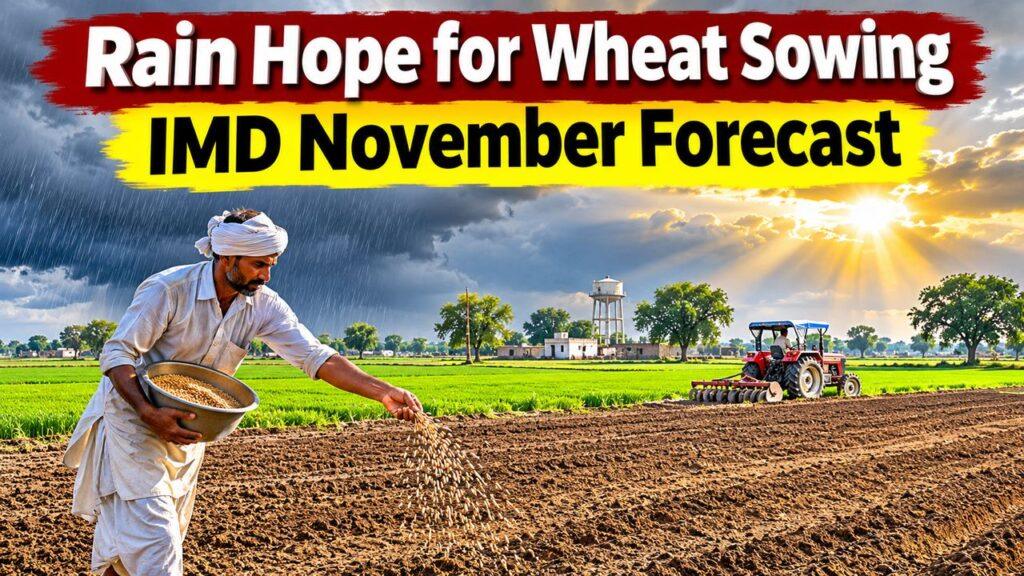
IMD November Rain Forecast Brings Relief for Haryana Wheat Sowing as Rabi Season Begins
Wheat farmers in Haryana are entering the main sowing season with a mixed but hopeful weather outlook, after the India Meteorological Department (IMD) forecast better November rain for several key wheat-growing regions. The forecast, shared by IMD Director-General M Mohapatra at a virtual press conference, comes after a deficient October and covers the heart of the rabi sowing period.
According to the IMD, November rainfall is likely to be normal to above-normal in Madhya Pradesh and adjoining parts of Maharashtra and Gujarat, as well as in East Uttar Pradesh and Bihar. These are among the country’s important wheat belts, and timely rain there would help soil moisture at the stage when the crop is being sown and taking root.
For Haryana, Punjab and West Uttar Pradesh, the forecast is for below-normal November rain. The IMD outlook itself notes, however, that these regions have almost fully irrigated wheat acreage, which limits the impact of a rainfall shortfall. Canal and groundwater irrigation gives Haryana’s wheat crop a buffer that rain-dependent areas do not have.
The picture is tougher for Rajasthan and much of Gujarat, where below-normal rain could weigh on rabi prospects in areas without assured irrigation. Overall, November rainfall across the country is likely to stay below 77 percent of the long-period average of 29.7 mm, and October ended as one of the driest on record, with the all-India deficit narrowing from 48 percent to 31 percent by October 31.
The government has set a foodgrain production target of 177.72 million tonnes for the 2026-27 crop year, including 121 million tonnes of wheat, along with 12.33 million tonnes of gram, 2.1 million tonnes of lentils, 14.3 million tonnes of mustard and 2.42 million tonnes of barley. For Haryana’s farmers, the sowing window that opens in the first week of November will now be watched closely, with irrigation carrying the crop through any dry weeks.