Haryana Yamunanagar Farmers Turn Paddy Stubble Into Profit: Straw Bales Earn Rs 180-190 Per Quintal
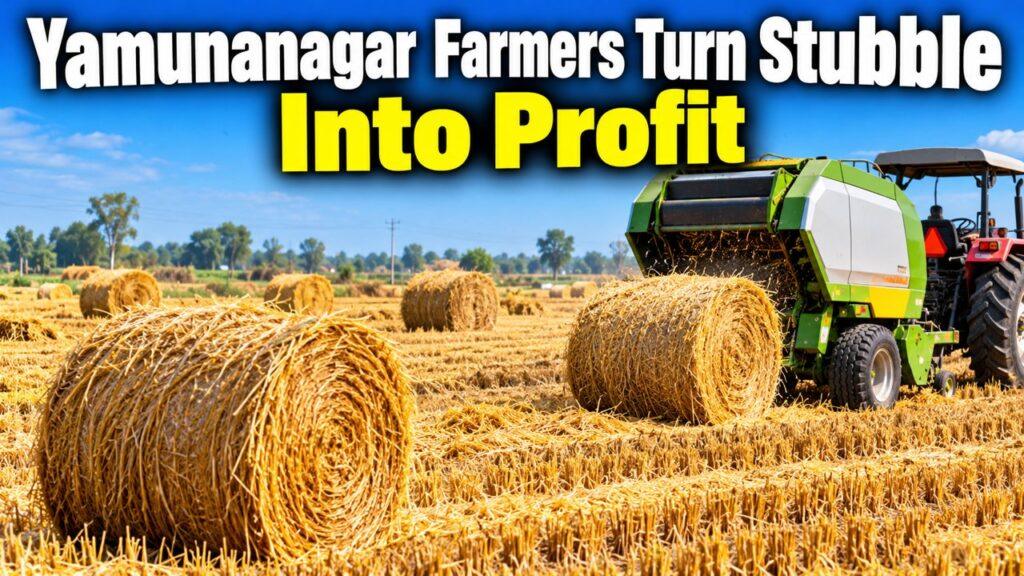
Farmers and entrepreneurs in Haryana’s Yamunanagar district are turning paddy straw into a source of income, converting what was once treated as waste into compact bales that industrial units buy as fuel. Instead of burning crop residue after the paddy harvest, they are collecting it, baling it and selling it — earning money while helping protect the environment.
The farmers engaged in this work include Navjeet Singh of Yasin Majri village, Gaurav Saini and Vikram Saini of Lahadpur village, Ramandeep of Ambli village and Paramjeet Singh of Harewa village. Using specialised balers, they collect the straw left behind after harvesting and compress it into bales, which are then transported to industrial units where the residue is used as fuel.
According to figures from the Haryana Agriculture and Farmers Welfare Department, paddy is cultivated on more than two lakh acres in Yamunanagar district, and about one lakh metric tonnes of paddy straw are converted into bales every year. The district has about 62 balers engaged in preparing agricultural residue bales in different areas, and operations are particularly active during the paddy harvesting season when large quantities of straw become available.
The market for the bales comes largely from Yamunanagar’s plywood manufacturing units and other industries, which are increasingly using agricultural residue as an alternative fuel. Biomass pellet manufacturing plants are also adding to the demand, creating a growing market for a resource that was earlier underutilised. At present, farmers and entrepreneurs are receiving about Rs 180 to Rs 190 per quintal for paddy straw bales, depending on market conditions.
One team alone prepares about 10,000 to 15,000 metric tonnes of paddy straw bales annually, showing how the work has grown from a small side activity into a full business. The shift also supports the wider campaign against stubble burning: Union Agriculture Minister Shivraj Singh Chouhan, launching the Khet Bachao Abhiyan at Karnal on 22 October, urged farmers to manage crop residue properly with cutters, rakes and balers so that it becomes a valuable commodity sold to industrial units rather than smoke in the fields.
For Yamunanagar’s farmers, the message is practical. The same straw that once had to be cleared before the next crop can now pay, and the district’s experience shows how farm income, industry demand and cleaner air can move together when residue is treated as a resource instead of a problem.