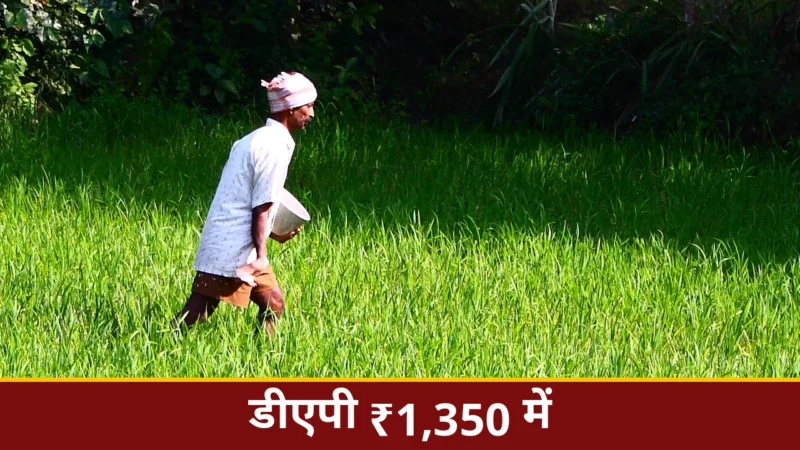
Thumbnail: Viksit Haryana | Haryana Parali Protsahan Yojana 2026, Rs 1,200 per acre incentive
Haryana Parali Protsahan Yojana 2026: Don’t Burn Stubble, Get Rs 1,200 Per Acre
Every year after the paddy harvest, the same problem returns to Haryana’s fields — stubble burning, smoke, bad air, and the fear of action against farmers. This time the Haryana Government has opened a path of reward alongside strictness: under the Parali Protsahan Yojana, a farmer who does not burn stubble and manages crop residue properly gets an incentive of Rs 1,200 per acre. This amount has been raised in 2026-27 — earlier it was Rs 1,000 per acre.
In this article you will find the complete and correct information about the scheme — how much assistance you will get, who is eligible, which documents are needed, how to apply online, when and how the money will come, and what action follows if stubble is burnt. Most importantly: what we could not verify officially about the last date, we have not hidden — the “Read This First” section below states the position clearly.
Read This First: What Is the Application Status in 2026-27?
| Point | Status as of 6 November 2026 |
|---|---|
| Incentive amount | Rs 1,200 per acre — in force in 2026-27, officially confirmed |
| How to apply | Meri Fasal Mera Byora (MFMB) registration + through the Agriculture Department — full process below |
| Last date | No separate last date could be publicly verified — the department has not published a separate last date for this incentive; the benefit is linked to Meri Fasal Mera Byora registration and field verification |
| Harvest season | Ongoing — harvesting began in September in Yamunanagar, Ambala, Karnal and Kurukshetra; in Sirsa, Fatehabad, Hisar and Jind by the last week of October |
| Machine subsidy (CRM) window | Closed — applications for 2026-27 were open from 18 July to 3 August 2026 |
What this means in plain words: if you sowed paddy this kharif season and did not burn the stubble, check your registration and crop details on the Meri Fasal Mera Byora portal today and contact your village Agriculture Development Officer (ADO) or the district agriculture office. Do not wait for a last date — verification happens by visiting the field, and once the harvest is over, verification becomes difficult. If this season’s window has already closed, the same preparation will help next season.
Scheme at a Glance
| Information | Detail |
|---|---|
| Scheme name | Parali Protsahan Yojana, Haryana |
| State | Haryana |
| Implementing department | Agriculture and Farmers Welfare Department, Haryana |
| Financial year | 2026-27 |
| Incentive amount | Rs 1,200 per acre (earlier Rs 1,000 per acre) |
| Who gets it | Paddy farmers of Haryana who do not burn stubble and manage crop residue properly |
| Payment method | DBT — directly into the Aadhaar-linked bank account |
| Mandatory condition | Registration on the Meri Fasal Mera Byora (MFMB) portal |
| Related machine subsidy | 50% (individual) / 80% (Custom Hiring Centre) on Crop Residue Management (CRM) machines |
| Action plan budget | Rs 576 crore action plan for 2026-27 |
| Official portals | fasal.haryana.gov.in (Meri Fasal Mera Byora) and agriharyana.gov.in (Agriculture Department) |
What Is the Parali Protsahan Yojana?
The Parali Protsahan Yojana is a Haryana Government scheme under which farmers who dispose of paddy stubble (crop residue) properly instead of burning it receive a cash incentive. Mixing the stubble into the field, getting it baled and selling it, using it as fodder, or sowing wheat without burning with a Happy Seeder or Super Seeder — all of these count as proper management.
The government’s aim is clear: to stop the air pollution caused by stubble burning and to give the farmer an option in which he gains, not loses. In the 2026-27 budget this incentive was raised from Rs 1,000 to Rs 1,200 per acre, and a provision of Rs 576 crore was kept for the entire stubble management action plan.
This scheme does not run alone — three more benefits are linked to it: a heavy subsidy on crop residue management machines, Rs 4,500 per acre for adopting direct seeding (DSR), and Rs 8,000 per acre under the Mera Pani-Meri Virasat scheme for sowing a less water-intensive crop instead of paddy. In other words, the government has put something on every path away from the stubble problem.
How Much Assistance Will You Get — Full Calculation
| Paddy area | Incentive amount at Rs 1,200/acre |
|---|---|
| 2 acres | Rs 2,400 |
| 5 acres | Rs 6,000 |
| 10 acres | Rs 12,000 |
| 25 acres | Rs 30,000 |
Please note: the amount is paid only on the area that is verified — that is, the acres in which paddy stood and stubble was not burnt. If fire is found in part of a field, that part gets no benefit and separate action may also follow.
| Linked benefit | Amount |
|---|---|
| Incentive for not burning stubble | Rs 1,200 per acre |
| On adopting direct seeding (DSR) | Rs 4,500 per acre |
| Alternative crop in place of paddy (Mera Pani-Meri Virasat) | Rs 8,000 per acre |
| CRM machine — subsidy on individual purchase | 50% of cost |
| CRM machine — Custom Hiring Centre (CHC) | 80% of project cost |
What Happens If You Burn Stubble — Know the Strictness Too
In the 2026-27 season the government has increased not just the reward but also the strictness. In a review of the state’s action plan held on 24 September 2026, chaired by Chief Secretary Anurag Rastogi, these decisions were taken:
| Action | Detail |
|---|---|
| Parali Protection Force | Deployed at district and block level — includes police, Agriculture Department, administration officers, nodal and cluster officers |
| Drone surveillance | Monitoring by drones on the directions of the Commission for Air Quality Management (CAQM), with support from DRIISHYA |
| Late-evening patrols | Late-evening patrolling increased to catch stubble burnt at night |
| FIR | An FIR will be registered in every verified case of stubble burning |
| Challan | A challan will also be issued along with the FIR |
| Red entry | A “red entry” will be recorded in the farmer’s land record (jamabandi) |
The red entry is the most serious part, because such an entry in the land record can create difficulties in future loans, government schemes and land transactions. That is why the Rs 1,200 per acre incentive is not just an earning — not burning stubble is now plainly a profitable deal.
Eligibility — Who Can Apply
- The applicant must be a resident farmer of Haryana.
- The farmer must have a paddy crop in his name and its registration on the Meri Fasal Mera Byora (MFMB) portal.
- The farmer must not have burnt his stubble — crop residue must have been managed by machine, baler, as fodder, or by mixing it into the field.
- The farmer must have a Parivar Pehchan Patra (PPP / Family ID) — treated as mandatory in Haryana’s agriculture schemes.
- The farmer’s bank account must be linked to Aadhaar, because the payment comes by DBT directly into the account.
- The field must be verified by a departmental officer — officers visit the field to check whether the stubble was burnt or not.
Please note: the final eligibility conditions may change as per the department’s live form and that season’s guidelines. Before applying, do check the rules in force at that time on the official portal.
Documents Required — Keep Them Ready
| Document | Why it is needed |
|---|---|
| Aadhaar card | Identity and DBT payment |
| Parivar Pehchan Patra (PPP / Family ID) | Mandatory identity in Haryana’s schemes |
| Meri Fasal Mera Byora registration | Record of crop and area — no benefit without it |
| Land record — jamabandi / fard / khasra | Proof of ownership and area of the field |
| Bank passbook / account details | Aadhaar-linked account for DBT payment |
| Mobile number | For OTP and status updates — keep the number linked to Aadhaar |
| Proof of stubble management (if asked) | Machine receipt, baler bill, CHC slip or related document |
Important: the list above is based on the general process of Haryana’s agriculture schemes. The live form on the portal is final — submit only the documents asked for in the form, and keep a clean scanned copy ready before uploading any document.
How to Apply Online — Step by Step
The benefit of the stubble incentive is linked to Meri Fasal Mera Byora registration and the Agriculture Department’s process. The general online process is as follows:
- Open the portal: On your mobile or computer, open fasal.haryana.gov.in (Meri Fasal Mera Byora). The department’s information can also be seen on agriharyana.gov.in.
- Choose the Farmer Section: On the homepage, click on “Farmer Section” (किसान अनुभाग).
- Log in: Log in with your mobile number or Aadhaar number — the OTP will come to the mobile number linked to your Aadhaar.
- Check crop registration: Check whether your paddy crop’s registration and area (khasra/field-wise details) are correct. If the crop is not registered, first complete the crop registration — without it, no incentive claim can be made.
- Choose the stubble management option: If an option related to the stubble incentive / crop residue management appears on the portal, select it and fill in the details. If the option is not directly visible, contact your ADO as described in the next step — many times this benefit is recorded through the district agriculture office.
- Upload documents: Upload the asked documents (Aadhaar, PPP, jamabandi, bank details).
- Submit the form and save the receipt: After submitting the form, note down the acknowledgement number you receive — this number will be needed later to check status and to complain.
- Wait for verification: Departmental officers will verify the field. At the time of verification, the stubble in the field must be in unburnt condition.
If any option is unclear while filling the online form, or the portal shows an error, take help from the nearest CSC (Common Service Centre) or agriculture office instead of filling the form wrongly.
Offline Application — For Those Who Face Difficulty Online
- Go to your village Agriculture Development Officer (ADO) or the district agriculture office and ask for the application form for the Parali Protsahan Yojana.
- Fill the form clearly with name, PPP number, village, khasra number, paddy area and the method of stubble management.
- Carry photocopies of all the documents mentioned above, and keep the originals too for showing.
- Do take a receipt when you submit the form — without a receipt it becomes difficult to ask about the status later.
- The form can also be filled at the nearest CSC centre — the CSC operator (VLE) helps with registration on Meri Fasal Mera Byora free of cost.
Fee and Timelines
Application fee: The department charges no fee for farmer registration on Meri Fasal Mera Byora. If a CSC charges any service fee, do take its receipt — do not pay any person a large sum in the name of the scheme.
Payment timeline: No fixed payment date has been officially published. Payment is made by DBT after field verification. As explained below in the CEEW study, delay in payment has been a real problem — so keep the receipt safe and keep checking the status from time to time.
Last date: As written above, no separate last date has been officially verified for this incentive. The benefit is linked to Meri Fasal Mera Byora registration and field verification, and the harvest season is ongoing — so check your registration immediately and contact your ADO; if you are late, verification may not be possible.
How to Check Status and How the Money Will Come
- Log in to fasal.haryana.gov.in and see the status of your application / crop registration.
- The status can also be asked at the district agriculture office using the acknowledgement number.
- The payment comes through DBT directly into the Aadhaar-linked bank account — so it is very important that Aadhaar is linked to the bank account and the mobile number is updated.
- If the money comes late or the status shows “pending”, register a complaint with your ADO or the district agriculture office along with the acknowledgement number.
CEEW Study Warning: Not Getting Paid Is Also a Reality
An independent study by CEEW (Council on Energy, Environment and Water), released on 28 October 2026, has brought out the real picture of this scheme. Between January and March 2026, 1,588 farmers in 144 villages across 12 districts were surveyed:
- Awareness about the scheme is 80% — farmers know that Rs 1,200 per acre is available.
- But only 42% of farmers applied.
- And of those who applied, only 57% received the payment.
In other words, merely knowing is not enough — applying, and then keeping an eye on the status, is equally important. The study also found that of the farmers who make stubble bales, 87% depend on an aggregator (middleman/collector), but only 7% of them got paid by the buyer — 62% of farmers give the stubble away free and 31% spend nearly Rs 1,000 per acre themselves just to clear the field. So when getting bales made, fix the buyer and the price in advance, and do take a receipt.
The good news is that 80% of farmers who use baling or use stubble as fodder want to continue the same method in 2026 — once a farmer adopts the right method, he does not want to leave it; only the payment should come on time.
Machine Subsidy: Stubble Management Machines at Half Price
Apart from the incentive amount, a heavy subsidy is available on buying stubble management machines under the central government’s Crop Residue Management (CRM) scheme — this subsidy also continues in the 2026 guidelines:
| Category | Subsidy |
|---|---|
| Individual farmer (machine purchase) | 50% of cost |
| Custom Hiring Centre (CHC) — on project cost | 80% |
| Machine | Work |
|---|---|
| Super Seeder | Direct wheat sowing in a field with stubble |
| Happy Seeder | Sowing without tillage, stubble remains as mulch |
| Smart Seeder | Modern sowing machine |
| Mulcher / Straw Chopper | Cutting stubble and mixing it into the field |
| Baler and Straw Rake | Making stubble bales (for sale/fodder) |
| Reversible MB Plough | Pressing stubble into the soil |
The figures show this system is working in Haryana: between 2018-19 and 2025-26 (till 10 February 2026), Haryana received Rs 1,156.71 crore under the CRM scheme, 1,10,767 machines were distributed in the state, and of the total 15.91 lakh hectares of paddy area, about 13.90 lakh hectares were managed by machines.
But please note: for 2026-27, online applications for CRM machines were open only from 18 July to 3 August 2026 — this window has now closed. Keep your Meri Fasal Mera Byora registration and PPP ready for the next window, so that you can apply as soon as the notification comes.
Frequently Asked Questions
- How much money is given under the Parali Protsahan Yojana?
In 2026-27, Rs 1,200 per acre is given. Earlier this amount was Rs 1,000 per acre. The amount comes by DBT directly into the bank account, as per the verified area. - Will I get the incentive if I burn the stubble?
No. The first rule of the scheme itself is that the stubble must not have been burnt. On burning, not only will there be no incentive, there can also be an FIR, a challan and a red entry in the land record. - Which portal is used to apply?
Meri Fasal Mera Byora — fasal.haryana.gov.in. The scheme’s information can also be seen on the Agriculture Department’s website agriharyana.gov.in. - What is the last date to apply?
No separate last date has been officially verified for this incentive. The benefit is linked to Meri Fasal Mera Byora registration and field verification, and the harvest season is ongoing — so check your registration immediately and contact your ADO. - By when will the money come?
No fixed payment date has been published. The amount comes by DBT after field verification. According to the CEEW study, only 57% of applicants received payment last season, so keep the receipt safe and keep checking the status on the portal regularly. - Is there a subsidy on buying a machine too?
Yes. Under the CRM scheme, an individual farmer gets up to 50% of the machine cost and a Custom Hiring Centre gets up to 80%. But the 2026-27 machine application window (18 July – 3 August 2026) has closed — keep your preparation ready for the next window. - What should I do with the stubble — what are the options besides burning?
Sow without burning with a Super Seeder or Happy Seeder, get bales made with a baler and sell them, use the stubble as fodder, or mix it into the field with a mulcher. The incentive or subsidy benefit applies to each of these methods.
More Useful Information for Farmers
- Central Government Sub-Mission on Agricultural Mechanization (SMAM): 40–50% Subsidy on Machinery
- Haryana Mukhyamantri Bagwani Bima Yojana: Rs 750 Premium for Rs 30,000 Cover
- SARAL Haryana Portal 2026: Apply Online for 557+ Government Services
Official Sources
- Haryana Government, Public Relations Department — Parali Protection Force and Rs 1,200 per acre incentive (24 September 2026)
- CEEW — Stubble Studies Press Release, 28 October 2026 (survey of 1,588 farmers)
- The New Indian Express — Parali Protection Force, drones and Rs 1,200 incentive, 24 September 2026
- Government of India, Department of Agriculture and Farmers Welfare — CRM machine subsidy 50%/80%, Rajya Sabha Question 153, 13 February 2026 (PDF)
- Meri Fasal Mera Byora — official portal
- Agriculture and Farmers Welfare Department, Haryana — official website
Note: The information in this article is based on official sources verified as of 6 November 2026. Before applying, do check the rules, dates and form in force at that time on the official portal — the live form shown on the portal is final.