
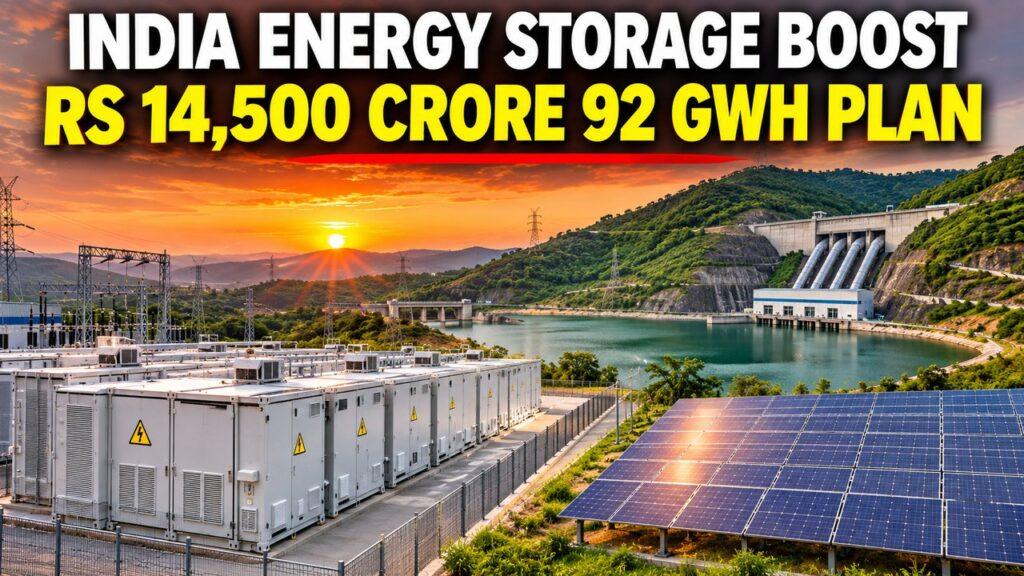
Modi Cabinet Approves Rs 14,500 Crore Energy Storage Scheme for India: 92 GWh Grid-Scale Capacity
The Union Cabinet chaired by Prime Minister Narendra Modi on Wednesday approved a Viability Gap Funding scheme worth Rs 14,500 crore for the development of grid-scale energy storage systems across India. Information and Broadcasting Minister Ashwini Vaishnaw announced the decision after the Cabinet meeting on 4 November 2026, saying the scheme will run from financial year 2026-27 to 2030-31. The programme is designed to add 92 gigawatt-hours of energy storage capacity that has not yet been commissioned, giving the power grid a much larger buffer to handle the ups and downs of renewable energy generation.
The 92 gigawatt-hours will come from three technologies. The largest share, 60 gigawatt-hours, will come from hydro pumped storage plants, which store energy by pumping water uphill and releasing it to generate electricity when demand rises. Battery energy storage systems will contribute 30 gigawatt-hours, and 2 gigawatt-hours will come from alternative and emerging storage technologies. Officials said the new capacity will equal about 170 per cent of the grid-scale storage capacity that exists in the country today, and it will help India reach the 411 gigawatt-hours of storage capacity estimated to be needed by 2031-32.
The total investment expected under the scheme is around Rs 97,600 crore, with the government’s Rs 14,500 crore viability gap funding closing the gap that makes storage projects commercially difficult in their early years. The scheme will be implemented in partnership with state governments, so that storage projects can be sited where the grid needs them most and where renewable generation is growing fastest. For battery storage projects, the scheme sets a minimum domestic content requirement of 40 per cent, a condition meant to push Indian manufacturing of batteries and components rather than leaving the entire value chain to imports.
The decision matters because nearly 52 per cent of India’s installed power capacity now comes from non-fossil fuel sources, and solar and wind power by nature vary with the weather and the time of day. Without storage, surplus solar power at midday can go unused, while evening demand peaks must be met from other sources. Grid-scale storage charges up when renewable generation is plentiful and discharges when demand peaks, smoothing supply, reducing curtailment of clean power and strengthening the grid against fluctuations. Pumped hydro provides long-duration storage at scale, batteries respond within seconds to grid changes, and the small emerging-technology share keeps newer options in play.
The scheme also connects directly with India’s manufacturing ambitions. Storage systems need batteries, power electronics and critical minerals, and building domestic capacity in these areas supports electric vehicles, electronics and advanced manufacturing as well. The initiative sits alongside the government’s National Critical Minerals Mission, which aims to secure supply chains for the materials that emerging industries depend on. Together, the storage scheme and the minerals push approved by the same Cabinet meeting point to a single strategy: generate more clean power at home, store it at home, and make more of the equipment at home.
For consumers, the practical effect of large-scale storage is a more reliable power supply as the share of renewables keeps rising. Projects will be selected and built over the five-year period to 2030-31, with states as partners in implementation. The scheme’s success will be measured not only in gigawatt-hours built but in how smoothly the grid absorbs the next wave of solar and wind capacity, and in how far domestic manufacturing grows to meet the demand for batteries and storage equipment.