Delhi-Varanasi Bullet Train: PM Modi Approves Northern Corridor, Journey in 3 Hours 33 Minutes
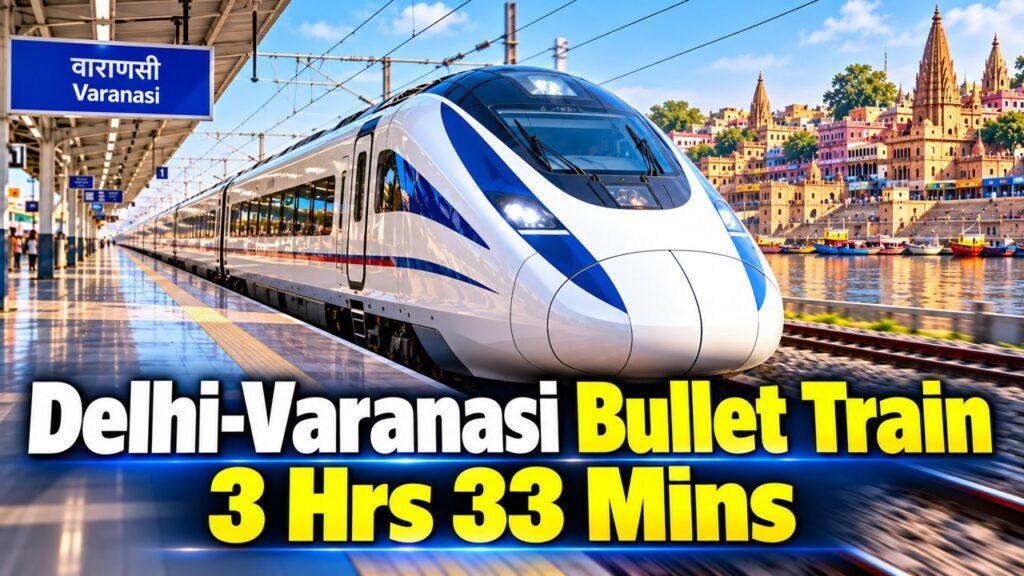
Union Railway Minister Ashwini Vaishnaw announced in Varanasi on Saturday that Prime Minister Narendra Modi has approved the Northern Corridor for India’s bullet train network, a high-speed route that would cut the journey between Delhi and Varanasi to a proposed 3 hours 33 minutes. The announcement, made on 31 October 2026, puts Uttar Pradesh on course for its first bullet train service and promises a sharp reduction in travel times across northern India.
The proposed corridor will begin in Delhi and pass through Agra, Kanpur, Lucknow and Ayodhya before reaching Varanasi, and will eventually extend to Patna and Guwahati. Vaishnaw said the corridor would serve the country for decades, and even up to a century, by giving passengers a faster alternative to conventional trains and flights on some of the busiest routes in the north.
The minister shared the proposed journey times for the corridor. Delhi to Agra would take 59 minutes, Delhi to Kanpur 1 hour 45 minutes, and Delhi to Lucknow 2 hours 12 minutes. Varanasi to Lucknow would take 1 hour 21 minutes, Varanasi to Patna one hour, Varanasi to Prayagraj 33 minutes, and Varanasi to Agra 2 hours 34 minutes. At present the Delhi-Varanasi trip takes several hours, so the new timings would transform travel for business passengers, students, pilgrims and families alike.
Vaishnaw also stressed that the bullet train would not be a service only for the wealthy. He said fares between Delhi and Varanasi would be kept lower than airfares so that middle-class families, small traders, young people and micro, small and medium enterprises could all benefit from the faster service.
The announcement came alongside other rail developments in Varanasi. Vaishnaw recently inspected a new road and rail bridge over the Ganga in Varanasi, which will be named the Namo Bridge. The bridge, about 2.5 kilometres long and estimated to cost Rs 2,657 crore, has a completion target of 2029 and will form part of the wider high-speed network.
Officials also noted that work on the detailed project report is being updated, so final route alignments, total costs and construction timelines will be firmed up after further feasibility studies. For now, the approval itself marks a major milestone for high-speed rail in northern India, and for Uttar Pradesh in particular, which stands to gain faster links between its biggest cities and the national capital.